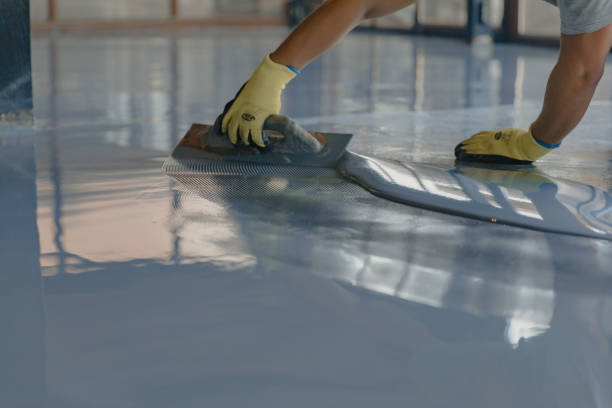
The kitchen floor has to take more wear and tear every day than just about any other part of a house. Spills, heavy equipment, constant movement, and temperature shifts can quickly destroy traditional materials. As a result, homeowners are increasingly seeking flooring solutions that blend resilience and crafting aesthetics.
One option on the rise is epoxy kitchen flooring. What was once primarily for commercial and industrial areas is now being adapted to residential kitchens with epoxy coatings. Their smooth surface, strength, and design versatility can make them a practical option for homeowners seeking both function and modern style.
How Does Epoxy Kitchen Flooring Work?
Epoxy flooring is made via a chemical reaction of resin and a hardener. Mixed and applied over a prepared concrete surface, these ingredients cure to form a rigid (but plastic-like) layer that adheres exceptionally well to the floor.
A Seamless and Protective Surface
Epoxy flooring is known for its seamless structure, which is one of its best features. Epoxy does not have joints or grout lines like tiles or wooden planks. The result is a sleek, continuous surface that feels clean and modern.
The smooth finish also prevents dirt, grease, and moisture from being trapped between gaps. This falls under the category of an invaluable feature, particularly in kitchens, where hygiene is important.
Strength That Handles Daily Activity
Kitchens experience heavy daily use. Often, scratches or cracks can result on many kinds of flooring from dropped cookware, moving chairs, and constant foot traffic.
Epoxy creates a hardened surface that offers abrasion, impact, and stain resistance. It cures to form a strong protective coating on the base concrete. The suitability of epoxy kitchen flooring is particularly useful for households in which the kitchen is frequented for cooking and gatherings.
Practical Advantages for Busy Kitchens
Apart from durability, epoxy flooring has benefits as well that make it even more preferable in terms of convenience and long-term performance.
Resistance to Moisture and Spills
Water, oil, sauces, and cleaning liquids are common in kitchens. Many flooring surfaces soak in these substances, potentially causing stains or other permanent damage.
Because epoxy floors are a non-porous surface, liquids lie on top of it rather than soaking into it. Spills generally can be quickly wiped up without leaving marks behind. This feature not only keeps the floor looking good, but also protects the underlying structure.
Easy Cleaning and Low Maintenance
Homeowners may also benefit from flooring that needs little maintenance. The maintenance of epoxy kitchen flooring is quite easy. A regular sweep and occasional mop are typically all that is needed to keep it looking clean.
Epoxy doesn’t require refinishing or special treatments to seal it, unlike wood floors. Its rugged surface enables it to retain its finish for years, even with simple care.
Customizable Design Options
The other reason epoxy is gaining popularity in residential kitchens is the infinite design possibilities. Decorative flakes, solid color coatings, and metallic finishes that produce unique visual effects can all be components of modern epoxy systems.
Homeowners can choose colors that coordinate with cabinets, countertops, and overall kitchen style. The shiny surface of epoxy also helps to light up the room when natural or artificial lighting shines on it.
Things to Keep in Mind Before Installing
Epoxy Flooring may not show issues for many days, but correct installation is crucial.
Preparing the Concrete Surface
Epoxy floors are only as strong as the concrete beneath them. Before installation, the surface must be cleaned and repaired. Cracks, moisture problems, or contaminants can impact the bonding process.
Typically, professional installers will grind or profile the concrete in order to prepare the perfect surface for epoxy coating to properly bond to.
The Value of Professional Application
While epoxy kits can be used for do-it-yourself projects, achieving a smooth and long-lasting finish on kitchen floors requires careful application. Incorrect mixing, uneven spread, and wrong curing times can all shorten the coating life.
Homeowners on a mission to learn more about the complete process regularly turn to extensive guides on epoxy kitchen flooring to see how systems are set up and maintained professionally.
Epoxy Kitchen Flooring NJ: An Increasing Popularity
Here is the answer: Epoxy flooring is a pragmatic solution for home displays in many regions. Epoxy kitchen flooring NJ, specifically, is becoming popular among homeowners seeking surfaces that work when the day gets demanding.
Suitable for Different Home Styles
Homes in New Jersey range from older houses to suburban developments to modern renovations. They come in neutral tones for owners who prefer a more low-key look or decorative finishes that catch the eye, but epoxy flooring can work with many interior styles.
Because it can be customized with colors and textures, epoxy pairs well with both traditional and contemporary designs in the kitchen.
Performance in Changing Weather Conditions
Some flooring materials are sensitive to moisture and temperature shifts; seasonal weather changes can affect the condition of your flooring. Epoxy bonds with concrete tightly, making it stay strong even when environments change.
Establishing that dependability makes it a great pick for homes with hot and humid summers as well as more frigid winters.
A Long-Term Flooring Investment
Different types of flooring come with different life expectancies, so homeowners are well within their rights to ask how long a given flooring will last before being in need of replacement. Epoxy coatings are built to last for several years, even with continuous use.
Epoxy floors are durable and require little maintenance, making them an attractive option for long-term value while still maintaining a modern look.
Conclusion
When picking kitchen flooring, you may want to maintain a balance between durability, hygiene, and aesthetics. Epoxy kitchen flooring is the answer to these needs, designed without joints, preventing grime and water build-up in your kitchen or down in cracks.
When applied to a properly prepared surface, epoxy forms a durable floor capable of withstanding the daily demands of cooking, cleaning, and family activity. Its increasing popularity especially among homeowners considering epoxy kitchen floors NJ, reflects a transition to the kind of material that delivers performance with contemporary style.
For anyone thinking about a kitchen upgrade, knowing the benefits and installation procedure of epoxy flooring can help make an informed, practical renovation decision.