Egyptian, Turkish, or Organic: Which Cotton Wins for Beach Towels?

The best cotton beach towels depend on how you plan to use them. Egyptian cotton wins on silky softness and strength, Turkish cotton wins on fast drying and easy packing, and organic cotton wins for gentle, planet friendly comfort. None of them is a bad pick. The right one simply depends on your beach habits, so let’s break it down.
Why Does Cotton Come in So Many Types?
Cotton is the most popular fabric for beach towels, and that popularity has produced plenty of varieties. Fibre length, the way the yarn is woven, and where the crop is grown all change how a towel feels in your hands. Long fibre types are the ones known for unmatched softness and absorbency, which is why Egyptian and Turkish show up on so many labels.
Knowing the differences helps you dodge a common trap, which is buying on looks alone. A towel can photograph beautifully and then feel scratchy once it’s wet. A little label reading goes a long way. Most cotton beach towels look alike on a shelf, but they behave very differently in the sun.
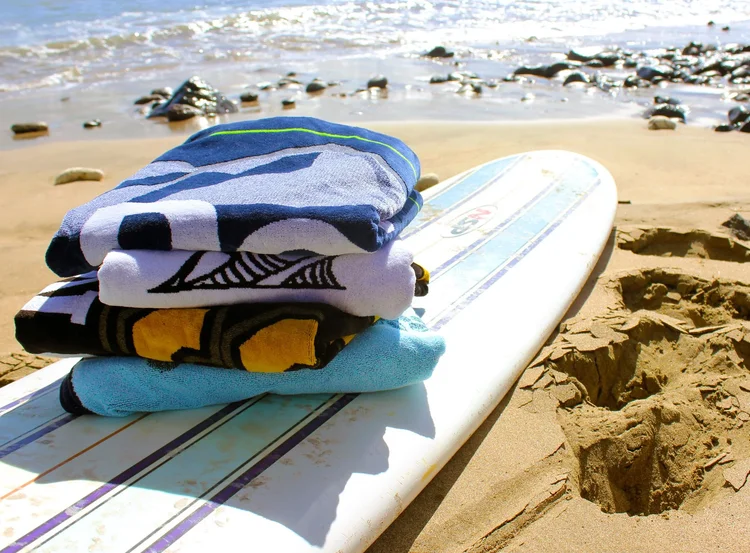
What Makes Egyptian Cotton Special?
Egyptian cotton is known for long, silky fibres. Those fibres create a fabric that’s luxuriously soft and strong at the same time, which is a rare pairing. Soft fabrics can wear down quickly, and strong ones can feel stiff. This one manages both.
Who Should Pick It?
Anyone who wants a plush, spa like feel at the beach. If you spend long afternoons lying on your towel reading or napping, you’ll notice the softness every minute. It also suits people who want a towel to last through many seasons of washing. Plenty of luxury beach towels lean on this kind of fibre for exactly that reason.
Is There a Downside?
Only a small one. If you choose a denser weave, which feels more plush, expect it to hold on to water a little longer than a lighter weave would. That’s not a flaw. It’s just a trade off to keep in mind when you’re packing.
Why Do Travelers Love Turkish Cotton?
Turkish cotton is lightweight yet absorbent. That’s an unusual combination, and it’s exactly why travelers reach for it. Because it dries faster, a damp towel in a hotel room becomes much less of a problem. It also folds down small, so it slips into a suitcase or tote without taking over the space.
Who Should Pick It?
Frequent flyers, road trippers, and anyone who moves from beach to restaurant to hotel pool in a single day. It’s also a smart second towel if you already own a plush one at home. Think of it as the one you grab when you’re short on time and bag space.
Is Organic Cotton Worth Considering?
If sustainability matters to you, absolutely. Organic cotton is gentle on the skin and kind to the environment, which makes it an easy choice for families and for anyone with sensitive skin. Kids spend a lot of time wrapped in a towel after swimming, so a gentle fabric is a real plus.
It’s also the option that lets you feel good about the purchase beyond the beach. Plenty of people care about where their things come from, and organic cotton answers that question in a simple way. You get comfort and a clear conscience in one towel.
Does the Weave Matter as Much as the Fibre?
Almost. A denser weave feels more plush and absorbs more, while a lighter weave dries quickly and travels easily. You can find Egyptian cotton in a dense weave or a lighter one, and the two will feel quite different. So don’t stop at the cotton name. Check how the towel is built, too.
The same idea applies to blankets woven with fine yarns, where the technique shapes the feel as much as the thread does. A good fibre in a careless weave is a wasted opportunity.
Who Builds Towels With This Much Care?
Hudson & Company is a U.S. based textile manufacturer with more than 25 years of experience, specializing in fully custom woven blankets and towels. The products are American made, with designs woven right into the fabric, and that approach supports durability and a premium feel. They work with distributors, brands, and music industry partners on retail, promotional, and event pieces, so quality has to hold up in real use. If you’re shopping for luxury beach towels that feel built rather than assembled, that’s the mindset to look for.
How Do You Decide Between Them?
Ask yourself three quick questions.
- Will you carry the towel on trips? Go with Turkish.
- Do you want the softest feel for lazy beach days? Go with Egyptian.
- Is gentle, sustainable comfort your priority? Go with organic.
Honestly, plenty of households end up owning two or three. One plush towel for weekends close to home, and one light towel for trips. That’s not overspending. It’s matching the tool to the job.
What Size Should You Pair With Your Cotton?
Size sits right next to fibre in importance. Standard towels run about 30 by 60 inches, and oversized ones reach up to 40 by 70. Pair a lighter cotton with a bigger size and you get plenty of room without too much bulk. It’s a clever way to enjoy the space of an oversized towel while keeping your bag manageable.
Final Thoughts: Which Cotton Should You Take Home?
Pick by lifestyle, not by label. Egyptian for softness, Turkish for speed, organic for gentle comfort. Whatever you choose, look after it. Wash before the first use, skip the fabric softener, line dry when you can, and shake out the sand before it goes in the machine.








Post Comment