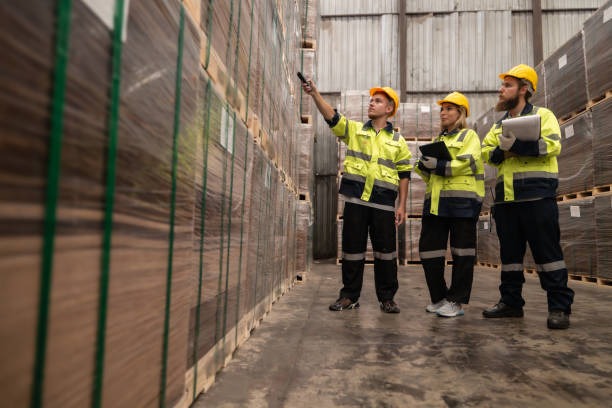
Speed and accuracy are two major priorities in logistics. Warehouses need to process freight quickly while ensuring that shipment information remains dependable. Manual pallet measurement can make both objectives harder to achieve, especially when facilities handle large volumes of freight. A pallet dimension scanner can automate this important task and help create a smoother logistics workflow.
Automated measurement is not simply about saving a few seconds per pallet. When repeated across hundreds or thousands of shipments, small efficiency improvements can have a noticeable effect on warehouse operations.
Understanding the Role of Automated Dimensioning
Pallet dimensions influence storage, loading, transportation, and shipment documentation. Because of this, accurate measurements need to be available at the right stage of the logistics process.
Automated scanning can capture dimensions as pallets pass through a designated area. This allows measurement to become part of the normal material flow rather than an additional manual activity.
Making Measurement More Consistent
Different employees may approach manual measurement differently. A pallet dimension scanner establishes a standardized method for capturing dimensional information.
Consistency is particularly valuable when multiple shifts or warehouse locations process the same types of freight. Standardized measurements can make operational data easier to compare and manage.
Increasing Shipping Efficiency
Shipping departments often work under time pressure. Freight must be verified, documented, staged, and loaded according to schedule.
Manual measurement can create delays when workers must stop other tasks to collect dimensions. Automated systems can reduce this interruption and allow employees to focus on shipment preparation.
Accurate dimensional data can also help identify unusual shipments before loading begins.
Improving Data Accuracy
A logistics record containing incorrect dimensions can cause problems later in the supply chain. Incorrect measurements may affect planning, documentation, storage assignments, or transportation arrangements.
Automated scanning reduces the need for employees to read measuring tools and manually enter numbers. This can help minimize certain types of human error.
Four Operational Advantages
- Faster processing: Pallets can be measured without lengthy manual procedures.
- Consistent records: Standardized scanning supports repeatable measurements.
- Less administrative work: Digital capture can reduce manual recording.
- Better planning: Reliable dimensions support storage and shipment decisions.
Supporting Transportation Planning
Transportation teams need to understand the physical characteristics of freight before creating efficient loading arrangements.
A pallet dimension scanner can provide information that helps planners evaluate available space and identify pallets that may require special handling.
This can improve communication between warehouse and transportation departments because both teams can work from the same dimensional information.
Improving Communication Across Departments
Disconnected information creates unnecessary friction. When warehouse employees record measurements manually and transportation teams later re-enter the same information, duplicate work becomes possible.
Integrated scanning can help establish a more direct path from physical measurement to digital records.
Choosing a Scanning System
The right technology depends on the operating environment. Businesses should consider the dimensions of pallets they handle, expected throughput, environmental conditions, measurement requirements, and software integrations.
Installation should also be planned carefully. The scanner needs to work within the existing movement pattern without creating unnecessary congestion.
A pallet dimension scanner should support the warehouse instead of becoming another process that employees must work around.

Building a Scalable Logistics Process
As businesses expand, logistics systems need to accommodate greater volumes without creating proportionally greater administrative workloads.
Automated measurement can support scalability by reducing repetitive activities and creating digital information that can move between connected systems.
Preparing for the Next Generation of Logistics
Future logistics environments are likely to rely increasingly on connected sensors, automation, real-time data, and intelligent software. Accurate dimensional information will remain important because automated systems need reliable physical data to make effective decisions.
Dimension scanning can therefore serve as a foundational technology within a broader digital logistics strategy.
Conclusion
Efficient logistics depends on accurate information arriving at the right time. A pallet dimension scanner can help businesses automate measurement, reduce manual work, improve data consistency, and support better shipping and storage decisions. By integrating dimensional scanning into existing workflows, logistics teams can create faster, more reliable, and scalable warehouse operations.