How Do Real Estate Development, Construction Innovation, and Water Technology Connect With Andrew Avi Greenbaum?
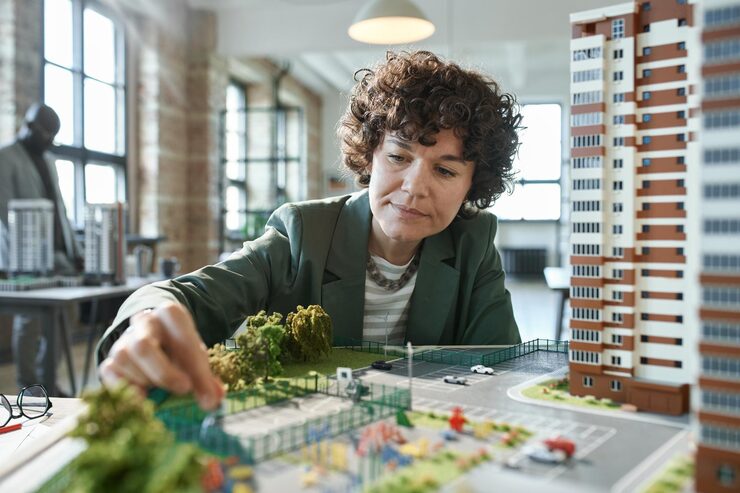
Real estate development is evolving as developers look for practical ways to address housing needs, manage construction expenses, and create properties that can serve communities over the long term. These challenges often require more than traditional property acquisition and construction. They also involve evaluating new building methods, understanding infrastructure requirements, and identifying opportunities to improve how developments are planned and managed.
Andrew Avi Greenbaum, also known as Avi Greenbaum, leads Triple Double, a real estate development and management platform with activities spanning workforce and affordable housing, medical and commercial office properties, residential conversion, and concrete panelized modular construction.
His broader business interests also extend into water technology through H2O Everywhere, a venture focused on atmospheric water generation. Together, these activities provide a perspective on how real estate, construction processes, and infrastructure-related technology can intersect.
Who Is Andrew Avi Greenbaum?
Andrew Avi Greenbaum is an entrepreneur and real estate executive whose professional background spans property development, financial markets, and business administration.
As CEO of Triple Double, he leads a platform focused on developing and managing real estate across several property categories. His reported experience includes buying or building more than 8,000 residential units and over 12 million square feet of commercial space during more than 20 years in the industry.
His entrepreneurial background includes co-founding Foundation Source, which became the largest administrator of private charitable foundations in the United States and was later sold for more than $110 million. He also founded Spectrum Capital Partners, a proprietary trading firm that grew to 200 employees.
Greenbaum’s education includes a Doctor of Business Administration from Florida International University, completed in 2026 with a dissertation focused on workforce housing, a Juris Doctor from Brooklyn Law School, and a Bachelor of Arts from Yeshiva University.
This combination of business experience and real estate activity provides context for understanding the different areas associated with his current work.
Triple Double’s Focus on Real Estate Development
Triple Double operates across several property categories, each with different development requirements and investment considerations.
Workforce and Affordable Housing
Workforce housing is intended to serve working households that may struggle to find suitable homes at prices aligned with local incomes. Affordable housing can also involve specific income limits, eligibility requirements, or affordability commitments.
Developing these properties requires careful consideration of land costs, construction expenses, financing, rental demand, and long-term property management.
A financially viable project must balance these costs with the resources available to its intended residents. Developers also need to understand local housing conditions and determine whether the proposed property meets a clearly identified need.
Medical and Commercial Office Properties
Medical and commercial office buildings serve businesses and professional users. Medical facilities may require specialized infrastructure, accessible layouts, and building systems appropriate for healthcare-related activities.
Conventional office properties depend on factors such as location, tenant demand, lease terms, and the flexibility of the building’s design.
For both categories, developers must understand the needs of potential occupants before making major investment decisions. A property’s physical characteristics and location should support its intended use and long-term operating requirements.
Residential Conversion
Residential conversion involves adapting existing buildings for housing. This approach can be worth considering when an underutilized property is located in an area with residential demand.
However, the process requires an assessment of structural conditions, zoning, building regulations, utilities, and renovation costs.
Developers must compare the total cost of conversion with alternative development strategies. The suitability of a property depends on its individual characteristics rather than the assumption that every underused building can become housing.
How Concrete Panelized Modular Construction Fits Into Housing Development
Triple Double operates a concrete panelized modular manufacturing platform focused on workforce housing.
Panelized construction involves producing selected building components away from the final construction site before transporting them for assembly. This changes how certain construction activities are organized and coordinated.
Depending on the design and project conditions, off-site manufacturing may provide opportunities for more standardized production and coordination between manufacturing and site preparation.
However, these potential advantages need to be evaluated against the complete development budget.
Manufacturing, transportation, installation, engineering, site preparation, and quality control all affect the final cost. Developers must also account for local building codes, site access, and the availability of appropriate equipment.
For workforce housing, the central question is whether the construction approach can support the project’s affordability goals while meeting structural, regulatory, and operational requirements.
Understanding H2O Everywhere and Atmospheric Water Generation
In addition to its real estate activities, Greenbaum’s business interests extend into water technology through H2O Everywhere, which focuses on atmospheric water generation.
Atmospheric water generation involves technology designed to obtain water from moisture present in the air. Depending on the system, the process can involve capturing atmospheric moisture and converting it into usable water.
The practicality of these systems depends on several factors, including local humidity, temperature, energy requirements, equipment capacity, maintenance, and water treatment needs.
Water technology can be relevant to discussions about buildings and infrastructure because access to reliable water is an important consideration for residential communities and commercial properties.
However, atmospheric water generation is not automatically a practical solution for every location. Its suitability depends on local environmental conditions, the amount of water required, the available technology, and the overall operating cost.
Evaluating these factors is necessary before determining whether such a system could serve a particular development or community.
Why Water and Housing Can Be Related
Housing development requires more than constructing a building. A completed residential property also depends on essential infrastructure, including water, electricity, transportation, drainage, and waste management.
The availability and reliability of these services can influence where development is feasible and what additional infrastructure may be necessary.
In areas where water supply is a concern, developers may need to examine local resources, utility capacity, water conservation measures, and alternative supply technologies.
Atmospheric water generation may be one option worth evaluating in suitable conditions, but it should be compared with established water supply methods and other available alternatives.
A responsible assessment should consider:
- The daily water demand of the proposed development.
- Local climate and atmospheric conditions.
- The energy required to produce usable water.
- Equipment capacity, installation, and maintenance costs.
- Water quality and treatment requirements.
- Regulatory approvals and applicable health standards.
- The reliability of the system under different conditions.
These considerations help determine whether a technology can meet practical needs rather than simply appearing innovative.
Evaluating Technology Through a Real Estate Investment Lens
Real estate investors generally need to understand how a proposed technology affects project costs, operating performance, and long-term risk.
A new system may offer potential benefits, but it can also introduce additional expenses, maintenance responsibilities, or technical uncertainty.
For example, a developer considering alternative water technology would need to compare the system’s expected performance and operating expenses with the available water supply options. The assessment should include installation, energy, repairs, equipment life, and the consequences of a system failure.
The same principle applies to construction innovation. A panelized building system should be assessed according to total installed costs, construction schedules, quality standards, and the specific requirements of the development.
Technology decisions should be based on measurable project needs and reliable performance information. An innovative concept is valuable only when it offers a practical advantage for the intended application.
The Importance of Integrated Planning
Real estate, construction, and infrastructure decisions influence one another.
A residential development’s location affects land costs and access to utilities. The building design influences construction requirements and future maintenance. The available infrastructure can determine whether a proposed site is suitable for its intended use.
Developers therefore need to evaluate these elements together.
For workforce housing, this means examining the relationship between housing costs, employment access, construction methods, and essential services. For commercial properties, the focus may include tenant requirements, building systems, utility capacity, and operating expenses.
An integrated planning process can help identify constraints before major capital is committed.
It also allows developers, engineers, lenders, contractors, and public agencies to coordinate their responsibilities around a common project plan.
What Investors and Development Partners Should Consider
Investors evaluating a platform that spans multiple business areas should understand the scope and structure of each activity.
Real estate development, manufacturing, and water technology involve different operating models, financial requirements, and risks. Their performance should be evaluated using appropriate evidence for each business.
For a real estate project, investors should examine market demand, acquisition costs, financing, regulatory approvals, construction plans, and expected operating income.
For a manufacturing operation, relevant questions include production capacity, quality control, supply arrangements, delivery schedules, and total costs.
For water technology, investors should examine technical performance, energy use, water quality, operating costs, and suitability for the intended environment.
Investors should also understand how the different activities are organized, how capital is allocated, and whether the financial performance of one business depends on another.
A clear understanding of these relationships supports a more informed assessment of the overall business platform.
Andrew Avi Greenbaum’s Academic and Professional Background
Greenbaum completed his Doctor of Business Administration at Florida International University in 2026, focusing his dissertation on workforce housing.
This academic focus relates directly to an important part of Triple Double’s stated real estate activities. Workforce housing requires developers to consider how land prices, construction costs, financing structures, and local incomes affect the feasibility of providing suitable homes.
His legal education and entrepreneurial experience also form part of his professional background. However, each development or technology investment requires independent evaluation based on its own requirements.
Education and leadership experience provide useful context, but project outcomes depend on practical execution, reliable information, and effective management.
Conclusion
Andrew Avi Greenbaum’s professional activities connect several areas, including real estate development, workforce housing, concrete panelized modular construction, and water technology through H2O Everywhere.
These fields address different challenges, but they can intersect when developers evaluate housing needs, building methods, and the infrastructure required to support communities.
For Triple Double, workforce housing and real estate development remain central areas of focus, while concrete panelized modular manufacturing represents a construction-related activity. H2O Everywhere adds a separate area of interest involving atmospheric water generation.
For investors, municipalities, and development partners, the important step is to assess each opportunity on its own merits. Market demand, technical feasibility, financial performance, regulatory compliance, and long-term operating requirements should guide decisions about whether a particular project or technology is appropriate.









Post Comment