Most people outside the vape industry picture e liquid manufacturing as something simple, maybe a few flavor drops mixed into a base liquid. That picture is, frankly, pretty far from reality. Professional production involves flavor science, precise compounding ratios, controlled batching, and strict quality checks before anything gets near a bottle. Understanding this process helps brand owners make smarter decisions when choosing who handles their production.
Where Does The Process Actually Begin?
It starts with flavor research and development. This stage isn’t just about taste, it’s about stability, shelf life, and how a flavor performs across different nicotine strengths. A flavor that tastes perfect at a low strength might taste completely different, or even unpleasant, at a higher one. That’s why formulation teams test extensively before locking anything in.
Three core paths typically happen here. A brand might want an entirely new flavor created from scratch, they might want an existing flavor replicated (perhaps one they loved from another product), or they might be exploring next generation formulations using newer flavor technology. Each path requires a different depth of testing, but all of them demand patience.
How Does Compounding Work In Practice?
Once a flavor profile is locked, it moves into compounding. This is where bulk quantities get mixed according to the finalized formula. Production batching at this stage has to be incredibly precise, because even small measurement errors can throw off the final taste or, worse, the nicotine concentration.
The truth is, this stage separates serious manufacturers from amateur operations. A facility built for controlled, repeatable batching will produce the exact same product whether it’s batch one or batch one hundred. That reliability is what allows brands to promise their customers a consistent experience every single time.
A Practical Scenario Worth Considering
Picture a mid sized vape brand that wanted to launch a menthol variant across four different nicotine strengths simultaneously. Without proper compounding controls, menthol intensity can shift unpredictably between strengths because of how it interacts with the base liquid. A skilled manufacturing team would test each strength variant separately during compounding, rather than assuming one recipe scales evenly across all four. This kind of attention prevents customer complaints down the line.
What Happens After Compounding?
Bottling and labeling come next, and this stage has its own complexities. Products typically need to be filled across multiple bottle sizes, commonly ranging from 30mL up to 120mL, each requiring different equipment calibration and label placement. Packaging design also plays a role here, since compliant, professional looking packaging affects both regulatory approval and shelf appeal.
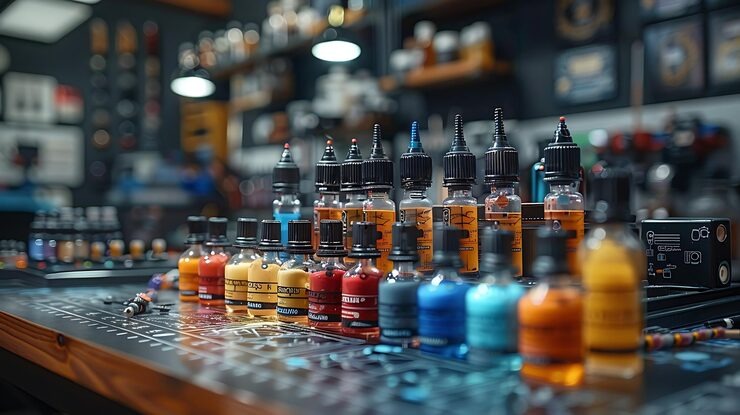
Many brands underestimate how much packaging influences perceived quality. A flavor can be genuinely excellent, but if the bottle looks unprofessional or the label peels after a week, customers associate that sloppiness with the product itself. This is why some manufacturers offer packaging design support directly, letting experienced designers handle it rather than leaving it to guesswork.
Why Should Brands Care About End To End Capability?
When one partner handles flavor creation, compounding, bottling, and packaging together, there’s far less room for miscommunication between stages. A e liquid manufacturer offering this kind of full service model can catch problems earlier, since the same team overseeing flavor stability is also overseeing how that flavor performs once bottled and shelved.
This matters even more for brands trying to scale quickly. Coordinating separate vendors for flavor, compounding, and packaging introduces delays and inconsistency risk at every handoff point. A unified process, by contrast, tends to move faster and produce more predictable results.
Conclusion
The journey from raw flavor concept to a finished bottle on a store shelf involves far more technical depth than most people realize. Flavor development, precise compounding, careful bottling, and thoughtful packaging design all need to work together, and each stage carries its own risks if handled carelessly. Brands that understand this process, and choose manufacturing partners who manage it end to end, tend to launch products that are more consistent, better tasting, and easier to scale over time.
FAQ
What is the first stage of e liquid production?
Flavor research and development is typically the starting point, where a recipe is tested for taste, stability, and performance across nicotine strengths before moving forward.
Why do bottle sizes matter in production?
Different bottle sizes, from 30mL to 120mL, require different filling equipment and label placement, so manufacturers need flexible processes to handle a range of packaging formats accurately.
Can one company handle the entire production process?
Yes, many manufacturers offer flavor development, compounding, bottling, labeling, and packaging design together, reducing the coordination challenges that come with using separate vendors for each stage.