Most people don’t think much about compressed air until something goes wrong with it. A tool loses power halfway through a job, a production line slows down for no obvious reason, or a tank starts making a noise it shouldn’t be making – and suddenly everyone’s asking questions nobody bothered to ask when the system was first installed. The frustrating part is that almost all of it could’ve been avoided with a bit more thought upfront.
Compressed air systems aren’t just “a compressor and some hoses.” There’s a whole chain of equipment working together, and if one piece is mismatched to the job, the rest of the system ends up compensating for it – usually not very well. Understanding how the pieces fit together makes the whole buying process a lot less confusing.
Storage Matters More Than People Assume
Here’s something that surprises a lot of first-time buyers: the compressor itself often isn’t the weak link. It’s the storage. A pressure vessel – the tank that holds compressed air until it’s needed – does more work than its simple design suggests. It smooths out pressure spikes, gives the compressor a buffer so it isn’t cycling on and off constantly, and reduces wear on the motor over time. Skimp on tank size or quality, and you’ll feel it in inconsistent pressure, more frequent compressor cycling, and equipment that wears out faster than it should.
Tank material matters too. Galvanized options hold up better in humid or coastal environments where standard steel would corrode within a few years. Foam tanks serve a narrower purpose, mostly in fire suppression systems where compressed air is used to push foam concentrate through the lines. None of these are interchangeable – picking the wrong one just moves the problem somewhere else in the system.
Matching Compressor Type to How You Actually Work
This is probably the single biggest mistake businesses make: buying a compressor based on price or size alone, without thinking about how it’ll actually be used day to day.
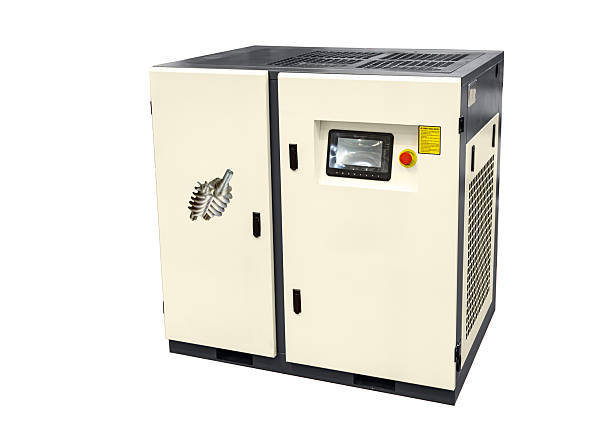
If your facility runs air more or less continuously – think production lines, large workshops, manufacturing floors – a screw compressor is usually the better fit. The rotary design is built for long, steady runs without the wear you’d see in other compressor types. A screw compressor tends to run quieter, more efficiently, and holds up better under a heavy daily workload, which matters a lot if downtime isn’t really an option for you.
Piston compressors work well the other way around – shorter bursts, occasional use, smaller operations that don’t need air running all shift long. They cost less upfront, which makes sense for a business that isn’t leaning on compressed air constantly.
And if the work isn’t happening in a fixed location at all, portable gasoline-powered units solve a problem neither of the above can. Construction sites, remote repairs, outdoor jobs without a power hookup – sometimes mobility is the whole point.

The Environment You’re Working In Changes Things
It’s easy to look at a spec sheet and assume it tells the whole story, but where the equipment actually sits changes how it performs. A hot, dusty manufacturing floor puts different stress on a compressor than a clean, temperature-controlled space. Heat affects cooling efficiency. Dust clogs filters faster than expected. Cold conditions can create condensation issues that catch people off guard. And if the unit’s going indoors, noise is worth thinking about too – nobody enjoys spending a full shift next to equipment that’s louder than it needs to be.
None of this means you need the most expensive, over-engineered setup available. It just means matching the equipment to the actual conditions it’ll be working in, rather than assuming one setup fits every space.
Power Source and How Often You’ll Really Use It
Electric compressors are the standard choice for fixed installations – steady, predictable, and generally cheaper to run over time. Gasoline-powered options make sense when portability outweighs convenience, particularly for outdoor or remote work. Usage frequency plays a bigger role in this decision than people usually give it credit for. A facility running air nonstop needs equipment built for continuous duty. Occasional, lighter use probably doesn’t justify paying for heavier-duty machinery you won’t fully use.
Getting It Right the First Time
At the end of the day, a reliable compressed air setup comes down to matching pressure, flow, tank capacity, and compressor type to how the operation actually runs – not to what looks impressive on a spec sheet. Get the fundamentals right, and the system fades into the background, doing its job without demanding attention. That’s really the goal with any equipment like this: something that just works, day after day, without becoming a constant source of maintenance headaches. Namerah puts that same thinking into how it approaches compressed air equipment, focusing on practical, application-specific solutions rather than one-size-fits-all setups.
FAQs
Q1: What is a pressure vessel used for?
A pressure vessel is designed to safely contain gases or liquids under pressure for storage, processing, and various industrial applications.
Q2: What are the benefits of a screw compressor?
A screw compressor can provide a continuous supply of compressed air, making it suitable for industrial processes that require consistent airflow.
Q3: How does a pressure vessel support compressed air systems?
It stores compressed air and helps stabilize pressure, reduce compressor cycling, and provide an available air reserve during periods of demand.
Q4: Where are screw compressor systems commonly used?
Screw compressor systems are widely used in manufacturing, construction, workshops, processing facilities, and other operations requiring dependable compressed air.
Q5: What should businesses consider when selecting a pressure vessel?
Businesses should evaluate capacity, operating pressure, material, application requirements, safety standards, installation conditions, and maintenance requirements.